DESIGN by TIFFANY ACOSTA, GRAYSCALE HOMES
PHOTOGRAPHY by RAQUEL LANGWORTHY
TEXT by RICHARD LALIBERTE
It’s one thing to renovate a historic home. It’s quite another to renovate a home where generations of one family have lived for more than a century. “My great-great-great-grandfather built our house in 1911,” says Meagan Hollerith. “We have photos of it going up with horses pulling loads of wood.”
Hollerith bought the house from her parents in April 2022. She and her husband Spencer envisioned raising their now-8-year-old son and 6-year-old daughter in a charmed place overflowing with heritage.
When the home was constructed in then-rural Montville Township, extended family lived in two other nearby homes, creating a multigenerational neighborhood tied to a working apple orchard. Hollerith’s house kept being passed down, and she grew up in it. “I had definite ideas about what I wanted to change,” Hollerith says. She also had convictions about what not to change.
“The task was to balance old and new,” says Tiffany Acosta, chief executive officer and lead designer at Grayscale Homes in Montclair. “A guiding principle was integrating fresh details but letting original details hold space.”
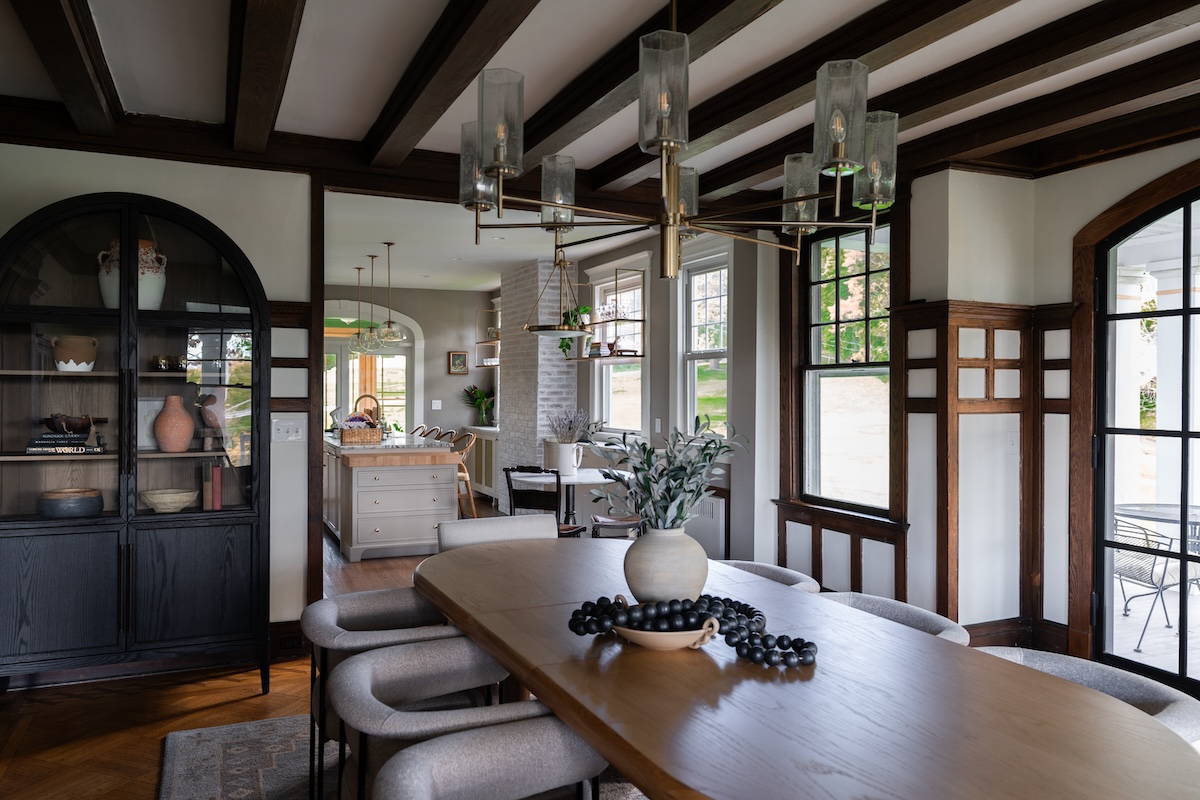
Interior rooms are rich in dark, vintage millwork—ceiling beams, board-and-batten walls, window and door frames, patterned floor—that hadn’t been altered through six generations. Owners of historic homes often cover dark wood with brighter hues. “But painting woodwork was out of the question,” Hollerith says. “I wanted the bones to stay old-looking—and to brighten with design styles that Tiffany brought in.”
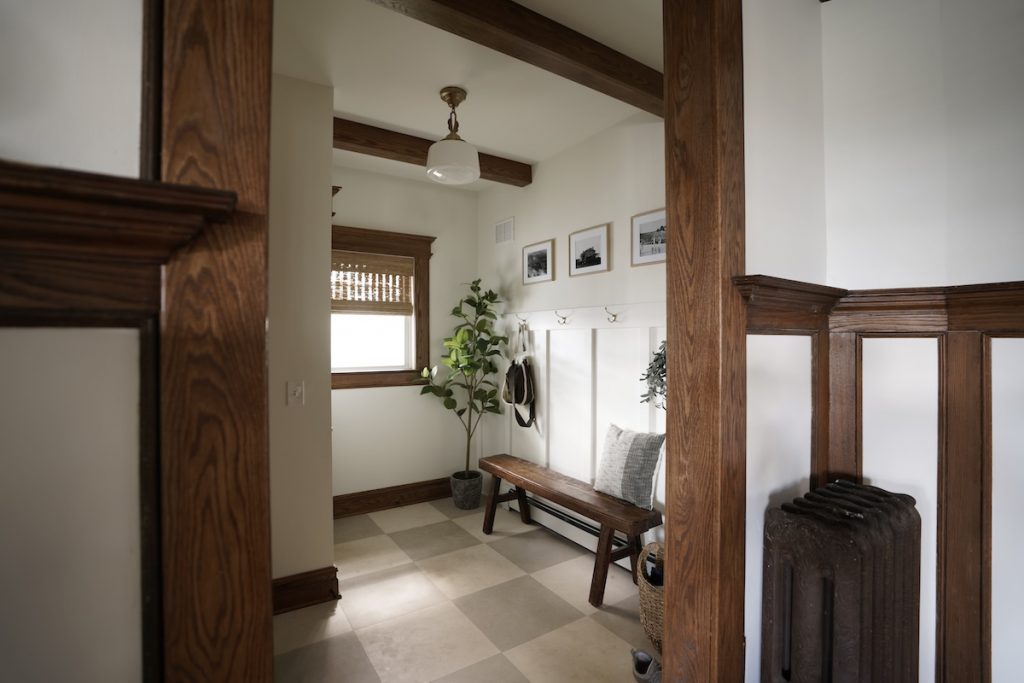
Some changes had already occurred. A garage for automobiles had been added long ago. Hollerith had updated the kitchen and bathrooms. But the heart of the project—living room, dining room, expanded den and added mudroom—awaited Acosta’s vision.
“Functionality was a motivator,” says Hollerith, who enlisted an experienced family friend as contractor.
For example, a window that originally had looked outdoors but now pointlessly offered a view into the garage became a built-in bookcase. Another set of windows became cast-iron doors that open onto an expanded, wraparound porch.
The new, highly practical mud room and enlarged den were blank canvasses with few original details to preserve. Acosta added harmonious touches such as wood ceiling beams while having a freer hand to employ light colors and more modern designs.
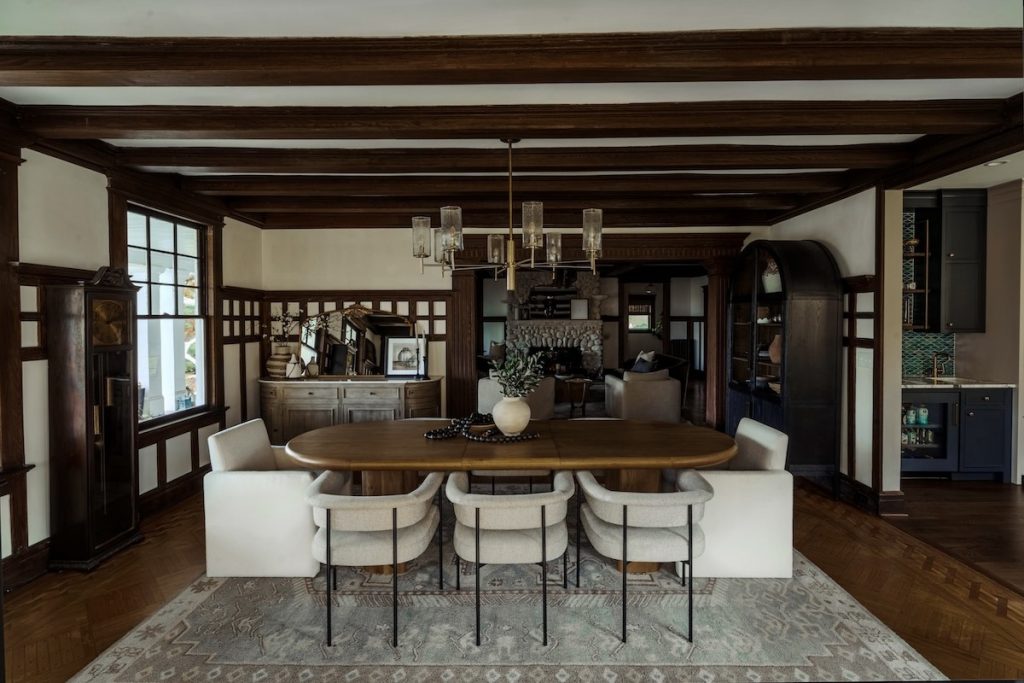
But refreshing the historic living and dining rooms relied on two key tools: furniture and lighting. “We leaned into modernizing with curvature,” Acosta says. “With all the wood panels and beams, there were a lot of straight lines. Playing with shapes makes things feel more curated.”
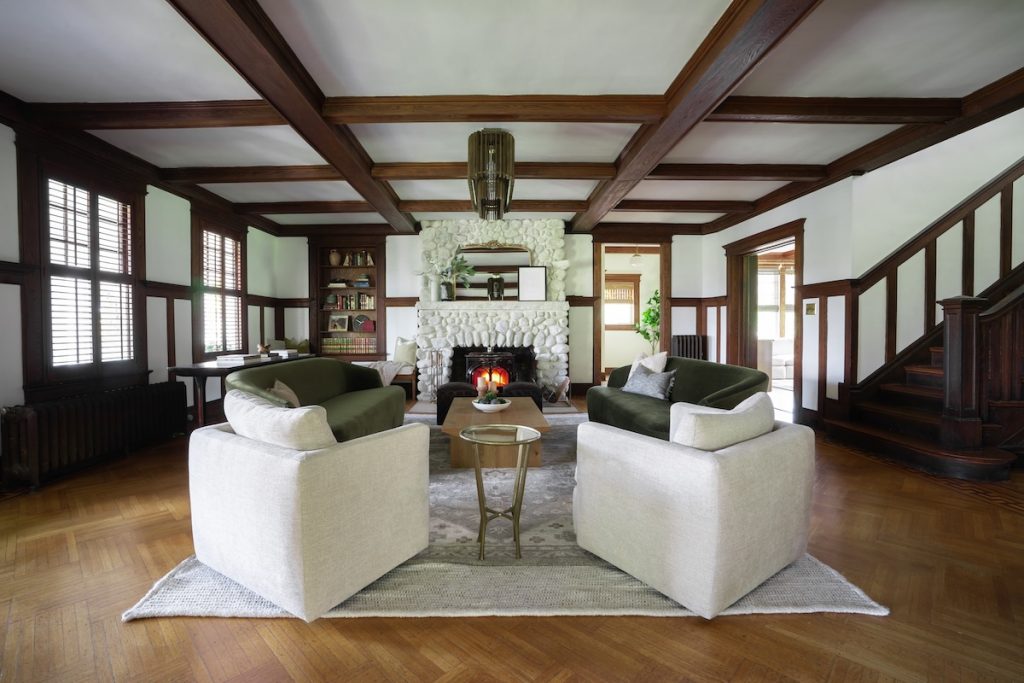
Rounded elements include the contemporary dining-room table and chairs, a buffet, an arched cabinet, the living-room ceiling light fixture, sofas and chairs, a side table and the porch double doors. “It’s a lot of curves in one space but it doesn’t feel that way because everything is surrounded by a lot of structure,” Acosta says. Light upholstery and floor coverings further brighten the atmosphere.
Hollerith says she’s “thrilled” with the results of what she calls “a labor of love,” completed a year after she and her husband bought the house.
“The project felt like a huge responsibility to those previous generations,” Acosta says. “I feel we paid the house justice and respect. I’m proud of what we did there.”